
Overview
A Gas Safety Certificate (CP12) is an official record confirming that gas appliances, pipework, and flues within a rental property have been inspected and deemed safe by a qualified engineer.
In the UK, inspections must be carried out by an engineer registered with the Gas Safe Register. Only engineers listed on this register are legally permitted to work on gas appliances.
The certificate is primarily a landlord legal compliance document and forms part of mandatory property safety management.
Evidence
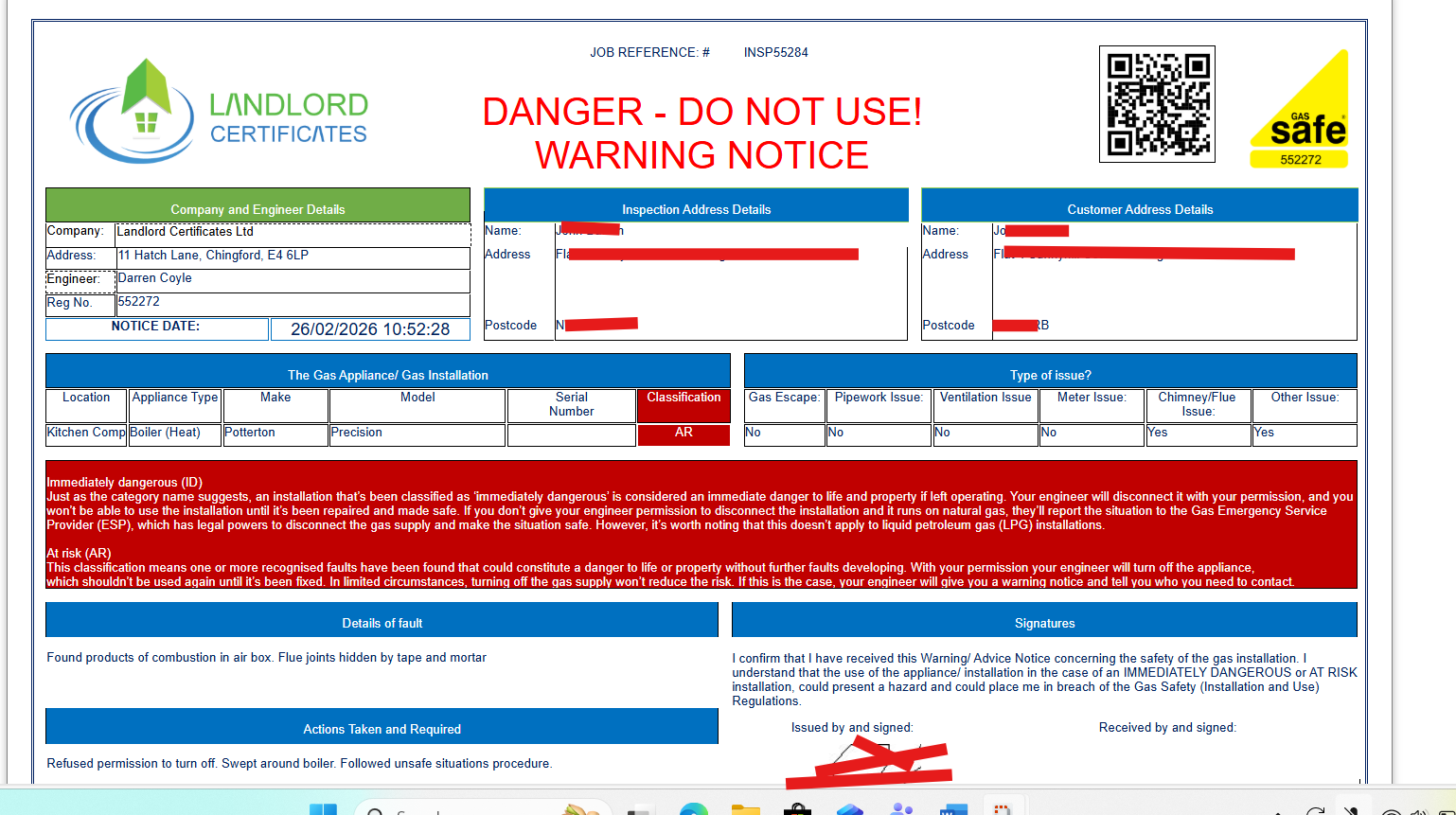
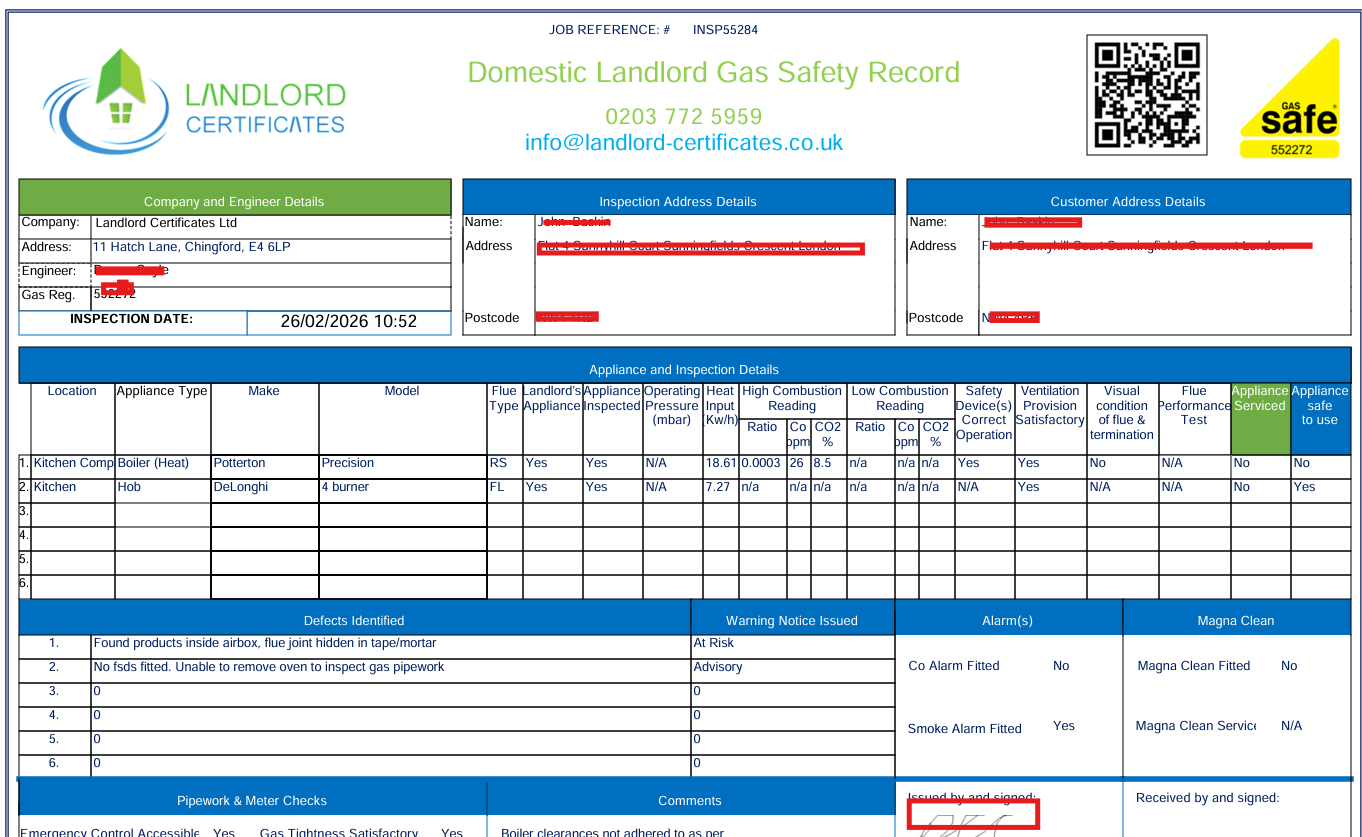
Please see our warning notice and Gas Safety Certificate .
Legal Framework
Under the Gas Safety (Installation and Use) Regulations 1998, landlords are legally responsible for ensuring gas appliances and flues are maintained in a safe condition.
Landlords must:
Arrange a gas safety check every 12 months
Use a Gas Safe registered engineer
Provide a copy of the certificate to tenants within 28 days of the check
Provide new tenants with a copy before occupation
Retain records for a minimum of two years
Non-compliance can result in enforcement action, fines, prosecution, imprisonment in serious cases, and invalidated insurance policies.
What the Inspection Covers
The inspection is a safety check rather than a full service. It confirms that gas installations are safe at the time of inspection.
Gas appliances checked typically include boilers, gas fires, cookers, hobs, and water heaters.
During the inspection, the engineer will assess:
Appliance Safety
Correct gas pressure and flow
Proper combustion performance
Operational safety devices
Secure appliance installation
Signs of unsafe wear or corrosion
Flues and Chimneys
Safe removal of combustion gases
Adequate ventilation
No blockages or disconnections
Proper sealing and support
Gas Pipework
Tightness testing to detect leaks
Soundness of installation
Accessibility of emergency isolation valve
Ventilation
Adequate air supply for safe combustion
Compliance with current standards
Information Contained on a CP12
A Gas Safety Certificate will include:
Property address
Landlord or managing agent details
Engineer’s name and Gas Safe registration number
Date of inspection
Appliance details (make, model, location)
Results of checks performed
Any safety defects identified
Classification of issues (if present)
Required remedial actions
Confirmation of overall safety status
Pass and Fail Classifications
If appliances meet safety standards, the certificate confirms compliance and is valid for 12 months.
If issues are found, they are categorised as:
At Risk (AR)
An appliance has a fault that could become dangerous. It should not be used until repaired.
Immediately Dangerous (ID)
An appliance poses an immediate threat to safety. The engineer may disconnect it on the spot.
If failures occur, remedial work must be completed before compliance is restored. A new certificate or written confirmation may be required after repairs.
Validity and Renewal
A Gas Safety Certificate is valid for 12 months from the date of inspection.
Landlords are permitted to renew the certificate up to two months early while preserving the original renewal date. This helps maintain a consistent compliance cycle.
Risk and Safety Importance
Gas safety checks are critical in preventing:
Gas leaks
Carbon monoxide exposure
Fires
Explosions
Serious injury or death
Carbon monoxide is colourless and odourless, making it particularly dangerous without proper appliance maintenance and testing.